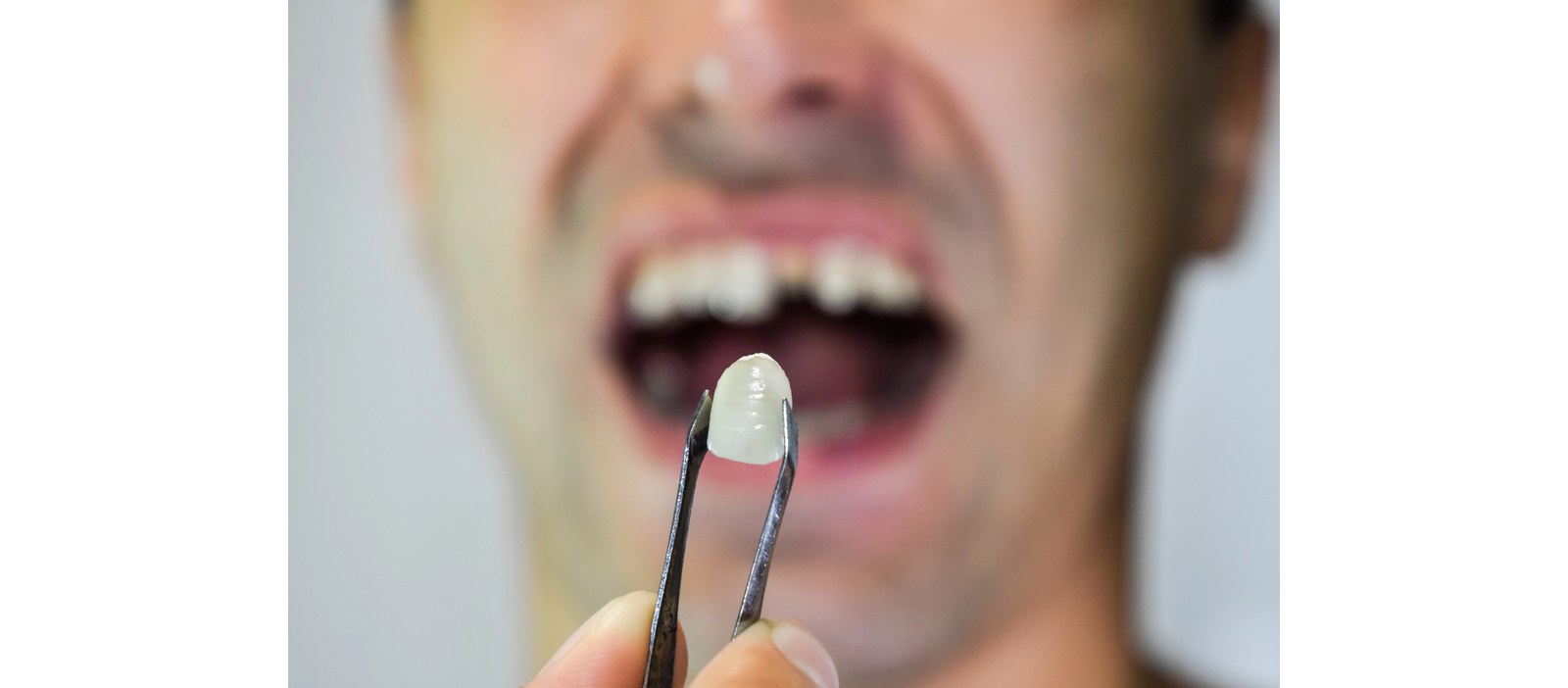
If a dental crown comes off, keep the crown, avoid chewing on that tooth and call the dental office to arrange an evaluation. A crown that comes off in one piece can sometimes be cemented back on, but that depends on the condition of the tooth underneath and the crown itself. Do not glue the crown back with household adhesive, because that can damage the tooth and make proper repair harder.
First Steps When a Crown Comes Off
The first goal is to protect two things: the crown and the exposed tooth. These steps are practical for most situations while waiting to hear from the dental team.
- Find and save the crown. Rinse it gently and store it in a clean, sealed container or bag. The dentist will want to inspect it.
- Check that the crown did not go down the throat. If it cannot be found and there is any coughing, wheezing or trouble breathing, seek emergency medical care.
- Look at the area without poking it. Note whether any tooth piece came off with the crown, or whether the tooth looks broken.
- Call the dental office. Describe what happened, whether there is pain or swelling and whether the crown is intact.
- Chew on the other side. The uncovered tooth is weaker and more sensitive than usual, which is why hard, sticky and very hot or cold foods are best avoided.
The emergency dental care team at the practice can advise on how soon the tooth should be seen, because that depends on the details described in the call.
Should You Put the Crown Back On Yourself?
The safest default is to keep the crown out and let the dentist reseat it. The Indian Dental Association’s dental emergency guidance advises against putting a crown back yourself when there is no discomfort and appearance is not a concern, and it specifically warns against super glue.
Some professional guidance describes temporary reattachment with pharmacy dental cement for comfort or appearance. That should be done only after the dental team says it is appropriate for that specific tooth. A crown pushed on at the wrong angle can change the bite, trap debris against the tooth or be swallowed while sleeping.
Household glue is the clearest “do not.” Super glue and similar adhesives are not designed for the mouth, can irritate the gums and can make it harder for the dentist to clean and reseat the crown.
Why Do Crowns Come Off?
Crowns usually come off because the bond between the crown and tooth has failed, and the reason behind that failure affects the repair. Common causes include:
- New decay at the edge of the crown that undermines the tooth
- Cement that has washed out or broken down over time
- A fracture in the tooth underneath the crown
- Sticky foods, hard foods or clenching and grinding forces
- A temporary crown, which is designed to come off more easily
Crowns do not last forever. The Cleveland Clinic’s overview of dental crowns describes an average lifespan of about five to 15 years, depending on materials and care. A crown that comes off after many years may simply be due for evaluation and replacement.
Can the Same Crown Be Re-Cemented?
Sometimes. The dentist decides by examining both the crown and the tooth, because a crown can look perfect on the outside while the tooth beneath it has changed.
| What the dentist finds | Possible next step |
|---|---|
| Crown intact, tooth sound, good fit | Clean and re-cement the existing crown |
| Decay under the old crown | Treat the decay, then usually a new crown |
| Crown cracked or worn through | Replacement crown |
| Tooth fractured below the crown | Rebuilding the tooth, a new crown or other options based on how much tooth remains |
| Tooth sore, infected or nerve involved | Further evaluation, which may include root canal treatment |
When a new crown is needed, a same-day crown is one option to ask about, although not every tooth or situation is suited to a single-appointment workflow. If a tooth is too damaged to support a crown, the dentist can explain other restorative dentistry options.
When Is a Lost Crown Urgent?
A lost crown is often uncomfortable rather than dangerous, but some signs call for prompt attention. Contact the dental office promptly if there is:
- Severe or worsening pain, or pain that keeps you awake
- Swelling in the gum, face or jaw
- A broken tooth with sharp edges cutting the tongue or cheek
- A crown that may have been swallowed or inhaled
The ADA’s MouthHealthy guidance on dental emergencies advises calling the dentist as soon as possible and providing as much detail as you can, and visiting a local emergency room when the dental office is not open. Facial swelling with fever or difficulty breathing or swallowing needs emergency medical care.
Frequently Asked Questions
Is it a problem if a crown came off but nothing hurts?
It still needs attention, even without pain. A tooth that has had a root canal may have little or no sensation, so a lack of pain does not mean the tooth is healthy. Uncovered tooth structure can chip, collect plaque and decay, and the neighboring teeth can shift slightly over time, which may stop the old crown from fitting again.
What if a temporary crown came off?
Call the office that placed it, because a temporary crown protects the prepared tooth and holds space for the final crown. Temporary crowns use weaker cement on purpose, so they come off more easily than permanent ones. Losing one is common, but the tooth can become sensitive and shift if it stays uncovered too long, which may affect how the final crown fits.
Can you swallow a dental crown?
Yes, crowns are sometimes swallowed, often while eating or sleeping. A crown that passes into the stomach is usually less concerning than one breathed into the airway. Call the dentist or a medical provider for advice, and seek emergency care right away for coughing, wheezing, choking or breathing trouble, because an inhaled object can require removal.
Does dental insurance cover re-cementing or replacing a crown?
Coverage varies by plan, so there is no single answer. Some plans limit how often a crown can be replaced, which is why the age of the existing crown can matter. The dental office can check benefits once the dentist determines whether re-cementing, a new crown or another treatment is needed. Moss Dental Studio lists accepted plans on its insurance page.
How can you lower the chance of a crown coming off again?
Keeping the edge of the crown clean is the most practical step, because decay at the crown margin is a common reason crowns loosen. Brushing twice daily with fluoride toothpaste, cleaning between teeth and keeping regular checkups help catch problems early. Avoiding very sticky candy, ice chewing and opening packages with teeth also reduces stress on the crown.
Getting a Lost Crown Checked at Moss Dental Studio
Moss Dental Studio sees patients for crown problems and other urgent dental concerns at its Eden Prairie and Lakeville offices. Call or contact Moss Dental Studio as soon as a crown comes off, and bring the crown with you to the visit.
For the Eden Prairie office, call (952) 974-5116 or get directions on Google. For the Lakeville office, call (612) 312-0087 or view the Lakeville location on Google.