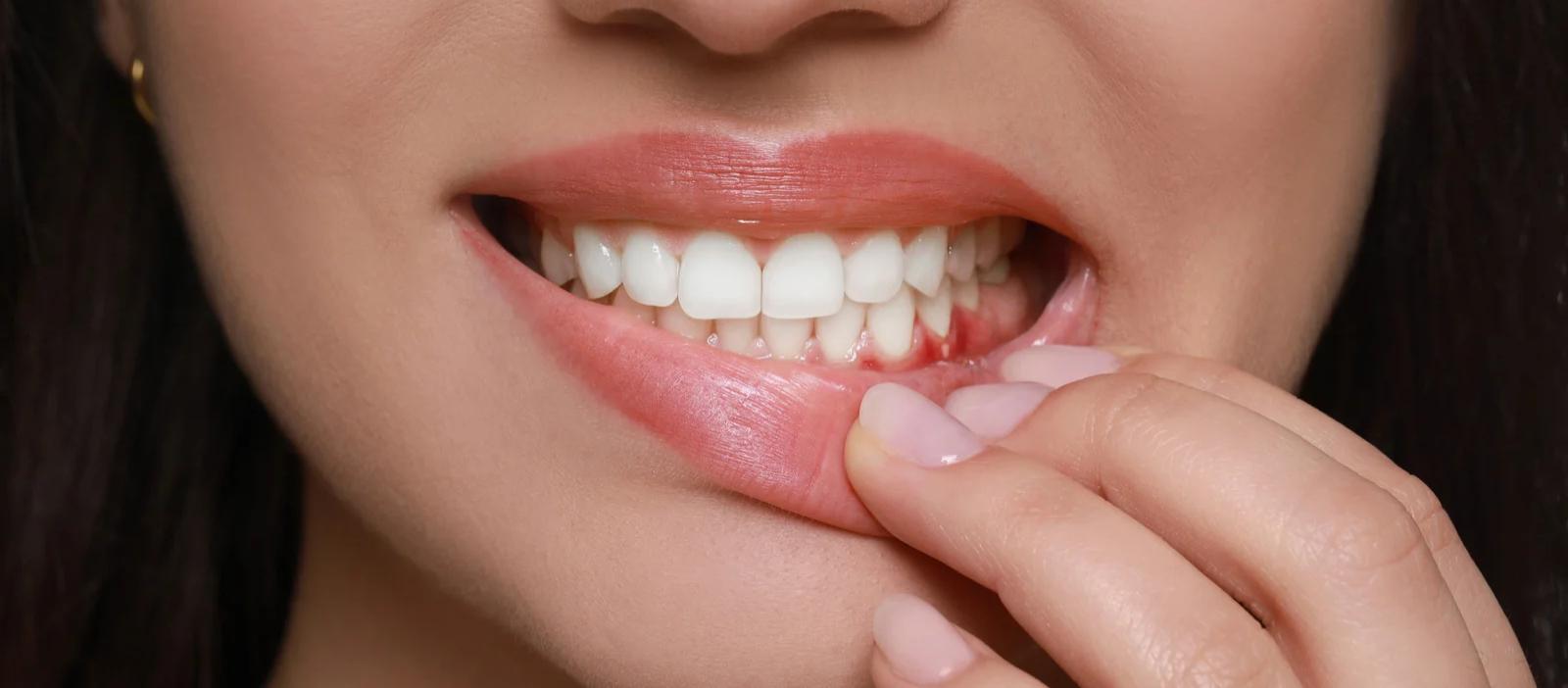
A little pink in the sink is easy to dismiss. It happens after flossing, perhaps after a vigorous brushing, and then it is forgotten until the next time. For adults reading about gum disease treatment in Lakeville, MN, that small, recurring signal deserves more attention than it usually receives. Healthy gums rarely bleed, and what lies beneath the surface is often the more important story.
Gum Disease Is Inflammation, Not a Hygiene Verdict
Gum disease is often misunderstood as a simple matter of dirty teeth. It is better described as an inflammatory disease affecting the tissues that hold the teeth in place, and it can develop in people who brush conscientiously every day. Diligence lowers the risk, though it cannot remove it entirely.
Genetics, medical history, tobacco exposure, medications, and areas that are difficult to clean all influence risk. Some people simply have a stronger inflammatory response than others. Guilt, in other words, is not a useful starting point.
Understanding is.
Gingivitis and Periodontitis
Gingivitis involves inflamed gums without the loss of supporting bone. With improved plaque control and professional preventive care, it may resolve entirely, which is why early attention is so worthwhile. Few dental problems are as reversible at their outset.
Periodontitis is a different matter. It involves loss of the attachment and bone that support the teeth, and once it develops, treatment needs to address disease below the gumline and the structures beneath it.
Signs Your Gums Deserve a Closer Look
Bleeding during brushing, flossing, or professional cleanings is the most familiar sign. It is far from the only one, and some people with significant disease notice very little bleeding at all.
Persistent redness, swelling, or tenderness may point to ongoing inflammation. Gum recession, or teeth that look longer than they once did, can suggest changes in the supporting tissues. Persistent bad breath or an unpleasant taste, shifting teeth, loosening, or a bite that feels different are all worth mentioning at your next visit.
None of these signs, on its own, establishes a diagnosis. Each is simply a reason to look more carefully. Together, they form a pattern worth sharing with your dentist.
How a Periodontal Evaluation Works
Moss Dental Studio approaches this question with care, because the most important decision is whether you need routine preventive cleaning or periodontal treatment. That distinction should come from a proper evaluation, not from bleeding alone or from the time elapsed since your last visit.
A periodontal evaluation looks well beyond whether the gums bleed. The dental team measures the spaces around each tooth, evaluates inflammation and recession, assesses plaque and hardened deposits, checks for mobility where relevant, and reviews images for changes in the supporting bone.
Your medical history, tobacco exposure, medications, previous periodontal care, and any challenges with home care also shape the picture. Together, those details guide a plan that fits your actual condition. That matters because two people with similar symptoms can need very different care.
Routine Cleaning and Deep Cleaning Are Not the Same
Calling both procedures a cleaning can obscure an important clinical difference.
A routine cleaning is preventive care for patients who do not require active periodontal therapy. Scaling and root planing, often called a deep cleaning, is nonsurgical treatment for selected patients with periodontitis, and it focuses on deposits below the gumline and on the root surfaces themselves.
The recommendation should rest on measurements, bone levels, inflammation, and where the deposits are located. When it does, you can trust that the care proposed is matched to the problem rather than to a schedule. Clear measurements also make it easier to see progress later.
What Treatment Can Include
Depending on the diagnosis, care may involve daily plaque control tailored to the areas you find most difficult, professional removal of deposits, scaling and root planing when nonsurgical therapy is indicated, and a re-evaluation to see how the tissues have responded. Some cases call for referral or periodontal surgery when disease or tissue defects require treatment beyond nonsurgical care.
Each step builds on the one before it.
A Patient’s Path, Step by Step
Consider someone in their forties who has noticed bleeding for a year or two and recently felt that one lower tooth seems slightly loose. At the evaluation, measurements reveal deeper pockets in a few areas, and images show early bone changes around those teeth.
Their plan might begin with scaling and root planing in the affected areas, along with specific guidance for cleaning the spots that have been hardest to reach. A few weeks later, a re-evaluation measures how the gums have responded, and the findings determine what comes next.
For many patients, that response is encouraging. Inflammation settles, bleeding lessens, and the focus shifts toward keeping the condition stable over time. Where pockets remain deeper than hoped, further treatment can be discussed.
How Gum Health Connects to the Rest of Your Care
Gums are the foundation for nearly everything else in dentistry.
Crowns, bridges, veneers, and implants all depend on healthy supporting tissue, so that a restoration placed in an inflamed mouth may not perform as it should. Orthodontic movement, likewise, is safest when the gums are stable. For this reason, periodontal health is often addressed before cosmetic or restorative work begins, even when the patient arrived thinking only about the appearance of a single tooth.
This sequencing can feel like a detour. In practice, it protects the investment that follows and tends to make the results last considerably longer.
Life After Treatment: Periodontal Maintenance
Periodontitis is a chronic condition, which changes the goal once active treatment is complete. The aim becomes controlling the disease and reducing the risk that it progresses again.
Periodontal maintenance addresses the history and specific sites of past disease, rather than treating you as though you had only routine preventive needs. Its interval is individualized according to the severity of the disease, your response to treatment, home care, risk factors, and overall stability, so some patients are seen more often than the familiar twice-yearly rhythm.
Home care carries just as much weight, because the hours between visits far outnumber the time spent in the chair. Thorough brushing, careful cleaning between the teeth, and any tools your dental team recommends all help protect the progress made in the chair.
Why Consistency Matters
Gum disease rewards steadiness. Missed maintenance visits allow deposits to rebuild below the gumline, where they are impossible to reach with a toothbrush, and inflammation can return quietly before any symptoms appear.
Keeping to the plan is often the difference between a stable mouth and a recurring problem.
Frequently Asked Questions About Gum Health
Does Bleeding When I Floss Mean I Have Gum Disease?
Bleeding can signal inflammation, though it does not establish a diagnosis by itself. Periodontal measurements and other findings are needed to understand what is happening.
Can Gum Disease Go Away on Its Own?
Gingivitis may improve when its causes are addressed. Established periodontitis with bone loss requires professional diagnosis, treatment, and ongoing management.
Can Gum Disease Lead to Tooth Loss?
Advanced periodontitis can damage the bone and attachment that support the teeth, which may lead to loosening and eventual tooth loss. Severity varies widely, so early evaluation is valuable. Treatment aims to preserve the teeth you have.
How Often Will I Need Periodontal Maintenance?
There is no universal interval. Your disease history, treatment response, risk factors, home care, and current stability guide the schedule.
Taking the Next Step with Moss Dental Studio
Dr. Kevin Molldrem of Moss Dental Studio has practiced dentistry for more than 20 years, and his continuing education in full mouth reconstruction reflects an appreciation for how gum health underpins every other aspect of the smile, from restorations to the bite itself.
To learn more about care for the gums, the practice website covers gum disease treatment in Lakeville, MN. The Moss Dental Studio blog offers further reading, and the contact page is the simplest way to arrange a periodontal evaluation.
You can also reach the Lakeville office at (612) 312-0087. It is located at 18389 Orchard Trail, Lakeville, MN 55044.