

General Dentistry
You do not need to know the name of a dental procedure before you make an appointment. If you are due for routine care, have noticed a change in your teeth or gums, or simply know that something does not feel right, general dentistry is usually the place to start.
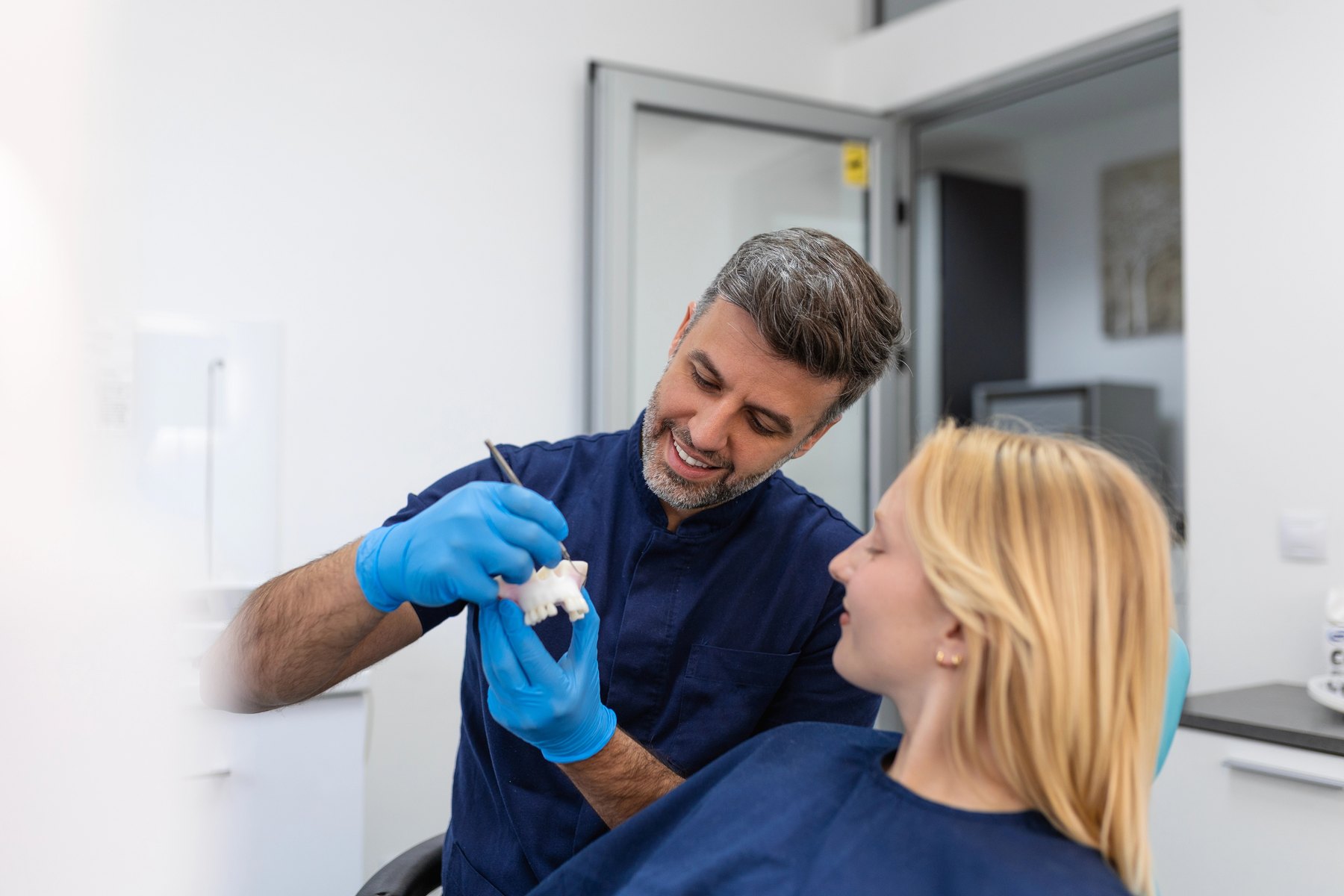
At Moss Dental Studio, general dentistry connects prevention, diagnosis, treatment planning, and ongoing care. Dr. Kevin Molldrem can evaluate what is happening, explain what needs attention now versus what can be monitored, and help you understand the next step. Meet Dr. Kevin Molldrem and learn more about his dental background and approach to care.
What Does a General Dentist Help With?
Think of a general dentist as your primary dental care provider. The goal is not simply to treat a cavity when one appears. General dentistry looks at the health and function of your teeth, gums, bite, and oral tissues over time, while helping you navigate treatment when a specific problem develops.
A general dental visit may lead to preventive care, monitoring, treatment, or a more focused evaluation depending on what the dentist finds. At Moss Dental Studio, that broader care pathway can include:
- Preventive and diagnostic care: Dental exams, professional cleanings, oral cancer screening, appropriate dental X-rays, fluoride treatment, sealants, and preventive guidance.
- Repairing damaged or decayed teeth: Treatment may include tooth-colored fillings or a crown when a tooth needs more support.
- Replacing missing teeth: Depending on your needs, options may include bridges, dentures, or dental implants.
- Gum health: Bleeding, inflammation, periodontal pockets, recession, or bone loss may require care beyond a routine cleaning.
- Tooth pain and urgent problems: A painful, cracked, infected, or injured tooth should be evaluated so the cause—not just the symptom—can guide treatment.
- Smile and bite concerns: Patients may also ask about whitening, bonding, veneers, Invisalign, braces, or other cosmetic and orthodontic options when oral health is stable.
Not Sure What Kind of Dental Appointment You Need?
That is a normal reason to start with a general dental evaluation. Tooth sensitivity can come from more than one cause. Bleeding gums are not the same problem for every patient. A chipped tooth may need anything from smoothing or bonding to a filling or crown, depending on how much structure was lost. Jaw discomfort, a loose restoration, or a change you can see in your mouth can also require different next steps.
The useful first question is not “Which procedure should I book?” It is “What is causing this, and what are my options?” A general dental evaluation is designed to answer that question.
If you have severe or rapidly increasing pain, facial swelling, dental trauma, uncontrolled bleeding, or another time-sensitive problem, use Moss Dental Studio’s emergency dental care information rather than waiting for a routine visit.
Preventive Care Is Personalized—not Just a Calendar Reminder
Some patients mainly need ongoing exams and preventive care. Others need closer monitoring because of previous cavities, gum disease, existing dental work, dry mouth, tooth wear, or other risk factors. Your recommended interval for exams, cleanings, and dental X-rays should reflect your current oral health and risk—not an arbitrary schedule applied to everyone.
That also means an exam and a cleaning are related but not interchangeable. The exam is where the dentist evaluates changes, diagnoses problems, and updates the care plan. A professional cleaning focuses on removing deposits and supporting gum health. If periodontal disease is present, the type and frequency of gum care may differ from a routine cleaning.
What Happens at a General Dentistry Visit?
The exact visit depends on why you are coming in, but a useful appointment should leave you with more clarity than you had when you arrived.
- Start with your concern and history. Tell the team about pain, sensitivity, bleeding, changes you have noticed, previous dental experiences, medications, and anything that makes dental care difficult for you.
- Examine the teeth, gums, bite, and oral tissues. The dentist looks for signs of decay, damaged restorations, gum problems, tooth wear, cracks, infection, and other findings relevant to your symptoms and history.
- Use diagnostic information when it is needed. Dental X-rays or other records can help evaluate areas that cannot be fully assessed by sight alone. Imaging should be selected according to the clinical need.
- Prioritize the findings. Not every finding requires immediate treatment. Your dentist should distinguish urgent needs, active disease, elective options, and areas that can be monitored.
- Discuss choices before treatment. When more than one reasonable option exists, the conversation should include what each option is intended to accomplish, its limitations, and how it fits your goals and circumstances.
General Dentistry, Family Dentistry, and Specialty Care: What Is the Difference?
“General dentistry” describes broad primary dental care: prevention, diagnosis, treatment of common dental problems, and coordination of care. “Family dentistry” is often used by practices to communicate that they care for patients across different stages of life. The terms can overlap, but neither term means that every procedure must be completed by the same dentist.
Sometimes the most appropriate next step is referral or coordination with another dental or medical professional. A general dentist’s role includes recognizing when a problem needs a different level or type of expertise. If referral is recommended, ask why it is appropriate and how that care fits into your overall treatment plan.
Returning to the Dentist After a Long Break?
You do not need to wait until your mouth feels “ready” to come back. If it has been several years, the first goal is to establish an accurate picture of your current oral health. That may mean updating records, evaluating your gums and existing dental work, discussing any symptoms, and deciding what should be addressed first.
A useful plan should be prioritized rather than overwhelming. Urgent disease and active problems come before elective changes. If several treatments are appropriate, ask whether they can be phased and what happens if a particular item is monitored instead of treated immediately.
From Routine Care to More Focused Treatment
General dentistry works best when patients can move easily from diagnosis to the right service without having to restart the conversation each time. Moss Dental Studio’s current service architecture includes restorative, implant, orthodontic, cosmetic, and emergency care in addition to routine dentistry.
For example, a cavity identified during an exam may lead to a tooth-colored dental filling; a structurally weakened tooth may be evaluated for a same-day dental crown; and a missing tooth may lead to a conversation about dental implant options. These dedicated pages explain those treatments in more depth without turning this general dentistry page into a list of every procedure.
Dental Care That Fits the Decision You Are Actually Making
Most patients searching for a dentist are not only asking, “Does this office provide general dentistry?” They are also deciding whether they will be listened to, whether the treatment plan will make sense, and whether practical questions about cost and scheduling will be clear.
Moss Dental Studio states that its treatment-planning approach begins by listening to the patient’s goals, discussing available options and their pros and cons, and matching the plan to the patient’s goals and budget. You can also review the practice’s dental insurance information and payment-plan information before deciding how to proceed.
General Dentistry in Eden Prairie and Lakeville
Moss Dental Studio provides care from two Minnesota offices. Choose the location that works best for you when scheduling:
- Eden Prairie: 800 Prairie Center Dr, Suite 250, Eden Prairie, MN 55344 — call (952) 974-5116
- Lakeville: 18389 Orchard Trail, Lakeville, MN 55044 — call (612) 312-0087
For maps and office information, view the Moss Dental Studio locations or contact the dental team.
Questions Patients Ask About General Dentistry
What services are included in general dentistry?
General dentistry commonly includes preventive care, exams and diagnosis, treatment of decay and damaged teeth, gum evaluation, urgent assessment, and coordination of more focused treatment. The exact services available vary by practice. At Moss Dental Studio, dedicated pages provide more detail for treatments such as fillings, crowns, implants, orthodontics, whitening, and emergency dentistry.
Is a general dentist the same as a family dentist?
The terms overlap but describe slightly different ideas. General dentistry refers to broad primary dental care. “Family dentist” usually communicates that a practice cares for patients at different life stages. If care for a child or a specific pediatric service is important to you, confirm that the service is appropriate and available when scheduling.
How often should I see a general dentist?
There is no single visit interval that is right for every patient. Your schedule should reflect your gum health, cavity risk, dental history, existing restorations, symptoms, and other individual factors. Your dentist can recommend an exam and maintenance interval after evaluating your oral health.
Do I need dental X-rays at every checkup?
Not necessarily. Dental X-rays should be selected according to your history, age, symptoms, disease risk, previous images, and what the dentist needs to diagnose or monitor. Ask why a particular image is recommended and what information it is expected to provide.
Can I see a general dentist if I have tooth pain but do not know what is wrong?
Yes. Diagnosing an undifferentiated dental problem is an important reason to see a general dentist. Tooth pain can come from decay, a crack, inflammation inside the tooth, gum problems, bite forces, or other causes. An examination—and imaging when indicated—helps determine the appropriate next step.
What if I have not been to a dentist in years?
Start with an evaluation rather than trying to solve everything before you arrive. The dentist can establish a current baseline, identify urgent and active problems, and organize treatment into priorities. If you feel anxious or embarrassed about the gap in care, mention that when scheduling so the team understands your concern.
Will a general dentist refer me to a specialist?
Sometimes. General dentists provide and coordinate a broad range of care, but referral may be appropriate when a condition or procedure would benefit from focused specialty expertise. Referral is not a failure of general care; it is part of matching the problem to the appropriate clinician.
Can I discuss cost before agreeing to treatment?
Yes. You should understand the recommended treatment and its financial implications before proceeding. Moss Dental Studio publishes insurance and payment-plan information, while actual coverage and out-of-pocket cost depend on the treatment plan and your individual benefits.
Ready for a Clearer Plan for Your Dental Health?
Whether you are due for routine care, looking for a new dental home, returning after time away, or trying to understand a new tooth or gum concern, you do not need to know which procedure to request before you call.
Start with a general dentistry appointment. The goal is to identify what is happening, separate urgent needs from things that can be monitored, and help you understand your options before deciding what comes next.
Eden Prairie: 800 Prairie Center Dr, Suite 250 — Call (952) 974-5116
Lakeville: 18389 Orchard Trail — Call (612) 312-0087