

Dental Bridge
A missing tooth changes more than the appearance of your smile. It can affect how you chew, how neighboring teeth share biting forces, and how easy the area is to maintain. A dental bridge is one way to replace a missing tooth—or, in selected cases, several teeth—with a restoration that stays in the mouth rather than being removed each day.
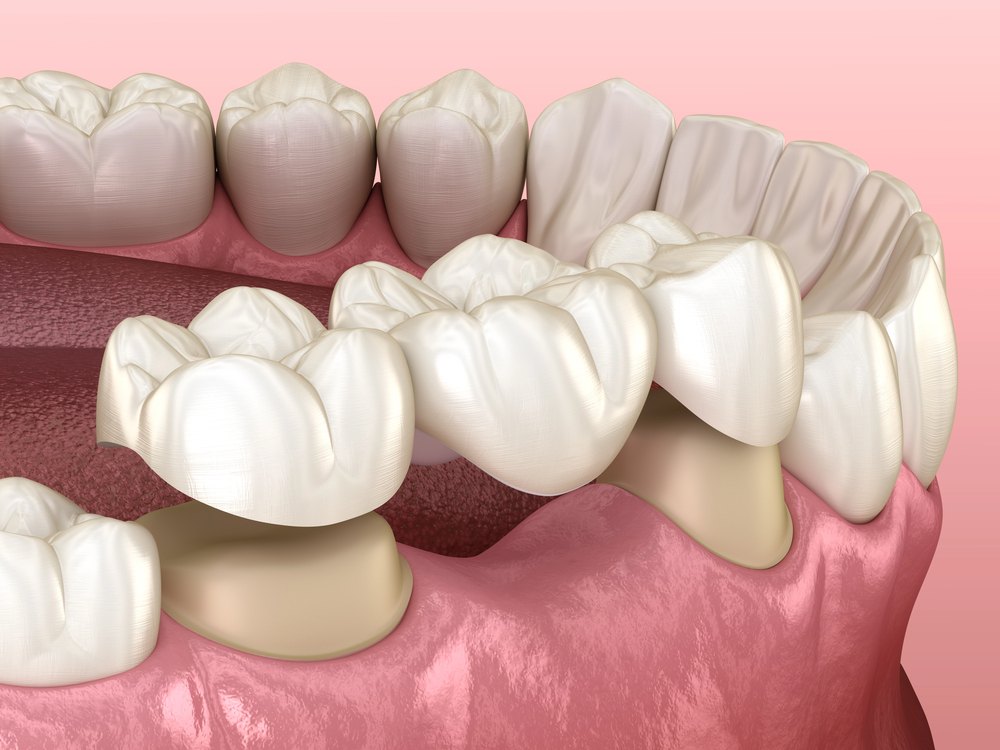
The important question is not simply whether a bridge can fill the space. It is whether the teeth, gums, bite, and supporting structures around that space make a bridge a sensible option for you.
How Does a Dental Bridge Replace a Missing Tooth?
A traditional fixed bridge uses teeth next to the gap as supports. Those supporting teeth are prepared for crowns, and an artificial replacement tooth is connected between them. Other bridge designs may use dental implants for support instead of natural teeth.
Because a traditional bridge relies on neighboring teeth, their condition matters. A tooth with significant decay, gum disease, structural weakness, or another problem may not be an appropriate support without additional treatment.
When Might a Bridge Make Sense?
- You are missing one or more teeth in an area that can be restored with a fixed prosthesis.
- The teeth next to the space are suitable to support the planned restoration.
- You prefer a fixed option rather than a removable partial denture.
- A bridge fits the overall condition of your gums, bite, and remaining teeth.
- You have compared a bridge with implant-based and removable alternatives and understand the tradeoffs.
Dental Bridge vs. Dental Implant
Both can replace missing teeth, but they solve the support problem differently. A traditional bridge uses neighboring natural teeth as anchors. A dental implant replaces the missing tooth root with an implant in the jaw and supports a crown or bridge without relying on adjacent natural teeth in the same way.
That difference affects treatment planning. A bridge may be attractive when neighboring teeth already need crowns or when implant treatment is not the preferred option. An implant may preserve untouched neighboring teeth, but it requires surgical placement and appropriate bone and oral health.
If you are deciding between these approaches, review dental implant treatment at Moss Dental Studio and bring your questions to the evaluation rather than choosing from a comparison chart alone.
What Is the Dental Bridge Process?
- Evaluate the missing-tooth space, supporting teeth, gums, bite, and relevant imaging.
- Discuss whether a traditional bridge, implant-supported option, removable replacement, or another approach best fits the situation.
- Prepare the supporting teeth when a conventional bridge is selected and capture the records needed to design the restoration.
- Use a temporary restoration when appropriate while the final bridge is being completed.
- Fit the final bridge, evaluate contacts and bite, and explain how to clean around and underneath it.
Cleaning Under a Dental Bridge Matters
A bridge may be fixed in place, but the area beneath the replacement tooth still needs daily cleaning. Plaque can collect around the supporting teeth and along the gumline. Your dental team can show you how to use floss threaders, interdental brushes, water-flossing devices, or another method that fits the design of your bridge.
The long-term health of a bridge depends in part on the teeth and tissues supporting it. New decay or gum disease around an anchor tooth can threaten the restoration even when the artificial tooth itself is intact.
What If the Teeth Next to the Gap Already Have Crowns or Fillings?
Existing dental work can influence the decision, but it does not automatically make a bridge right or wrong. The dentist needs to assess the condition of those teeth, how much healthy structure remains, the fit of existing restorations, and whether they can predictably support the planned bridge.
Dental Bridge in Eden Prairie and Lakeville
Moss Dental Studio provides care from two Minnesota offices. Choose the location that works best for you when scheduling:
- Eden Prairie: 800 Prairie Center Dr, Suite 250, Eden Prairie, MN 55344 — call (952) 974-5116
- Lakeville: 18389 Orchard Trail, Lakeville, MN 55044 — call (612) 312-0087
For maps and office information, view the Moss Dental Studio locations or contact the dental team.
Questions Patients Ask
How many teeth can a dental bridge replace?
A bridge can replace one or more missing teeth in selected situations, but the number and location of missing teeth and the strength of the supports affect whether a bridge is appropriate.
Do the teeth next to the gap have to be filed down?
For a traditional tooth-supported bridge, the supporting teeth are prepared for crowns. Implant-supported and other bridge designs use different forms of support.
Can food get under a dental bridge?
Food and plaque can collect beneath the replacement tooth and around the supporting teeth. Daily cleaning under and around the bridge is an important part of maintaining it.
Is a bridge better than an implant?
Neither option is automatically better for every patient. A bridge and an implant use different support systems and have different treatment requirements. The condition of neighboring teeth, gums, bone, bite, medical considerations, preferences, and cost all matter.
How long does it take to get a dental bridge?
Timing depends on the bridge design, whether supporting teeth need treatment first, how the restoration is fabricated, and whether healing or implant treatment is involved. Your dentist can provide a case-specific sequence after evaluation.
What happens if a supporting tooth develops a problem later?
Because a traditional bridge depends on its anchor teeth, decay, fracture, or gum disease affecting a support can compromise the bridge. Contact your dentist if the bridge feels loose, the bite changes, or you develop pain or swelling.
If financial planning is part of your decision, review Moss Dental Studio’s dental insurance information and payment-plan information.
Missing a Tooth? Compare Your Replacement Options Before You Decide.
If a gap is affecting how you chew, how your smile looks, or how neighboring teeth function, you do not have to decide between a bridge, implant, or removable option before seeing a dentist.
Schedule a missing-tooth evaluation so Moss Dental Studio can assess the space and supporting structures, explain which options fit your situation, and help you understand what each choice would require.
Eden Prairie: 800 Prairie Center Dr, Suite 250 — Call (952) 974-5116
Lakeville: 18389 Orchard Trail — Call (612) 312-0087