

Pediatric Dental Exam
A pediatric dental exam looks at more than whether a child has cavities. Children’s mouths are changing: baby teeth erupt and fall out, permanent teeth emerge, the bite develops, oral habits change, and children gradually take on more responsibility for brushing and flossing.
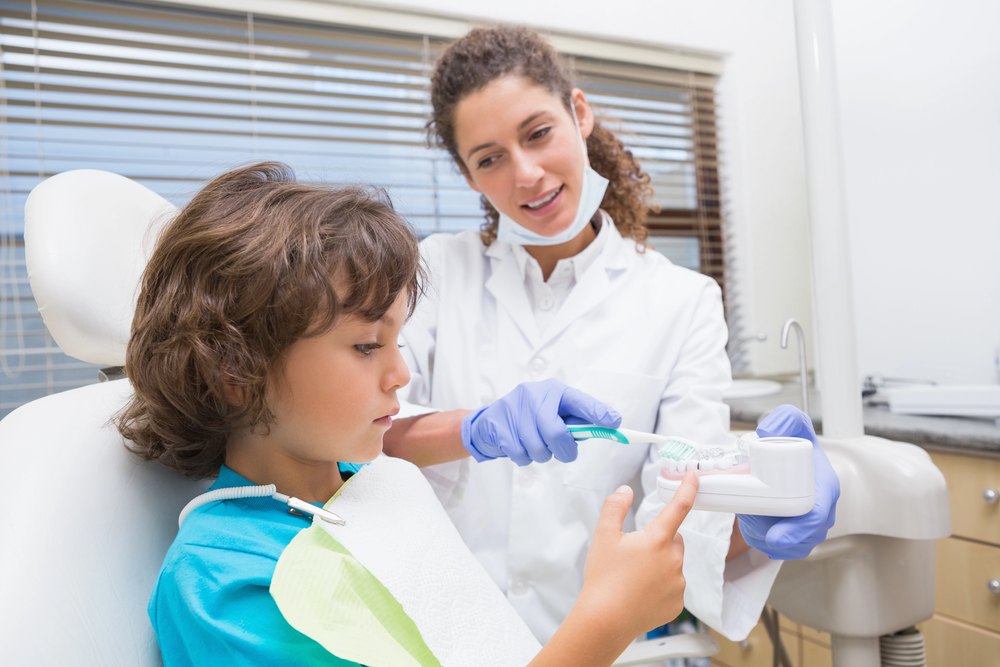
The exam gives the dentist and caregiver a chance to monitor those changes, identify problems early, and adjust prevention as the child grows. It can also help a child become familiar with dental care without making every appointment feel like a response to pain.
What Does the Dentist Check During a Child’s Exam?
- Teeth for decay, enamel changes, fractures, wear, and other visible concerns.
- Gums and oral hygiene for plaque-related inflammation or difficult-to-clean areas.
- Eruption of baby and permanent teeth and whether development appears to be progressing as expected.
- The bite and tooth alignment for developing concerns that may need monitoring or orthodontic evaluation.
- Oral tissues, lips, tongue, and other visible structures.
- Existing fillings, sealants, space maintainers, orthodontic appliances, or other dental work.
A Pediatric Exam and Cleaning Have Different Jobs
A professional cleaning removes deposits and supports prevention. The dental exam is diagnostic: the dentist evaluates development, tooth and gum health, bite, and specific concerns. They are commonly completed during the same preventive visit, but one does not replace the other.
Does Every Child Need X-Rays at Every Exam?
No. Dental X-rays should be selected according to the child’s age, eruption pattern, cavity risk, symptoms, previous images, tooth contacts, and what the dentist needs to diagnose or monitor.
Caregivers should feel comfortable asking why an image is recommended and what information it is expected to provide.
What About Fluoride and Sealants?
The exam is a good time to reassess cavity risk. Professionally applied fluoride may provide additional enamel protection for selected children, while dental sealants can protect susceptible grooves in permanent back teeth.
Neither service replaces daily brushing with fluoride toothpaste, interdental cleaning when appropriate, and attention to frequent sugar exposure.
Monitoring Growth, Tooth Eruption, and the Bite
Routine exams allow the dentist to observe crowding, spacing, early loss of baby teeth, eruption patterns, oral habits, and developing bite relationships over time.
When something needs a closer orthodontic look, the dentist can explain whether continued monitoring or a separate orthodontic evaluation is appropriate.
Helping an Anxious Child Through the Exam
Children vary in how quickly they become comfortable in a dental setting. Age, previous experiences, sensory preferences, temperament, and the reason for the visit can affect cooperation.
Tell the team if your child is especially anxious or has had a difficult previous experience. An early visit may focus on building familiarity while gathering the information the child can comfortably tolerate.
Pediatric Dental Exam in Eden Prairie and Lakeville
Moss Dental Studio provides care from two Minnesota offices. Choose the location that works best for you when scheduling:
- Eden Prairie: 800 Prairie Center Dr, Suite 250, Eden Prairie, MN 55344 — call (952) 974-5116
- Lakeville: 18389 Orchard Trail, Lakeville, MN 55044 — call (612) 312-0087
For maps and office information, view the Moss Dental Studio locations or contact the dental team.
Questions Patients Ask
When should a child first see a dentist?
Dental organizations commonly recommend establishing dental care early, around eruption of the first tooth and no later than the first birthday. If your child is older and has not been seen yet, it is still appropriate to start now.
How often does my child need an exam?
The interval should reflect the child’s oral health, cavity risk, development, and dentist’s recommendation rather than assuming every child has identical needs.
What if my child will not cooperate?
The team can adapt the visit to age and comfort. Sometimes building familiarity over time is more productive than forcing every planned step at one appointment.
Do baby teeth matter if they will fall out?
Yes. Baby teeth support chewing, speech, development, and space for permanent teeth. Disease or premature loss can create problems before natural exfoliation.
Will the dentist check whether my child needs braces?
Routine exams can identify developing alignment or bite concerns. A separate orthodontic evaluation may be recommended when more detailed diagnosis is appropriate.
Should I mention snoring or mouth breathing?
Yes. Share oral habits, breathing or sleep observations, grinding, jaw concerns, pain, and other changes you have noticed so the dentist has appropriate context.
Want a Clearer Picture of How Your Child’s Smile Is Developing?
A pediatric dental exam gives you more than a cavity check. It helps track tooth eruption, gum health, oral habits, bite development, prevention needs, and the questions that naturally change as your child grows.
Schedule your child’s dental exam with Moss Dental Studio and tell the team if this is a first visit, your child feels anxious, or you have a specific concern about development, pain, cavities, or tooth eruption.
Eden Prairie: 800 Prairie Center Dr, Suite 250 — Call (952) 974-5116
Lakeville: 18389 Orchard Trail — Call (612) 312-0087