

Dental X-Rays
Dental X-rays help your dentist answer questions that cannot always be answered by looking in your mouth alone. They can reveal areas between teeth, around roots, beneath existing dental work, and within supporting bone—information that can change both the diagnosis and the treatment plan.
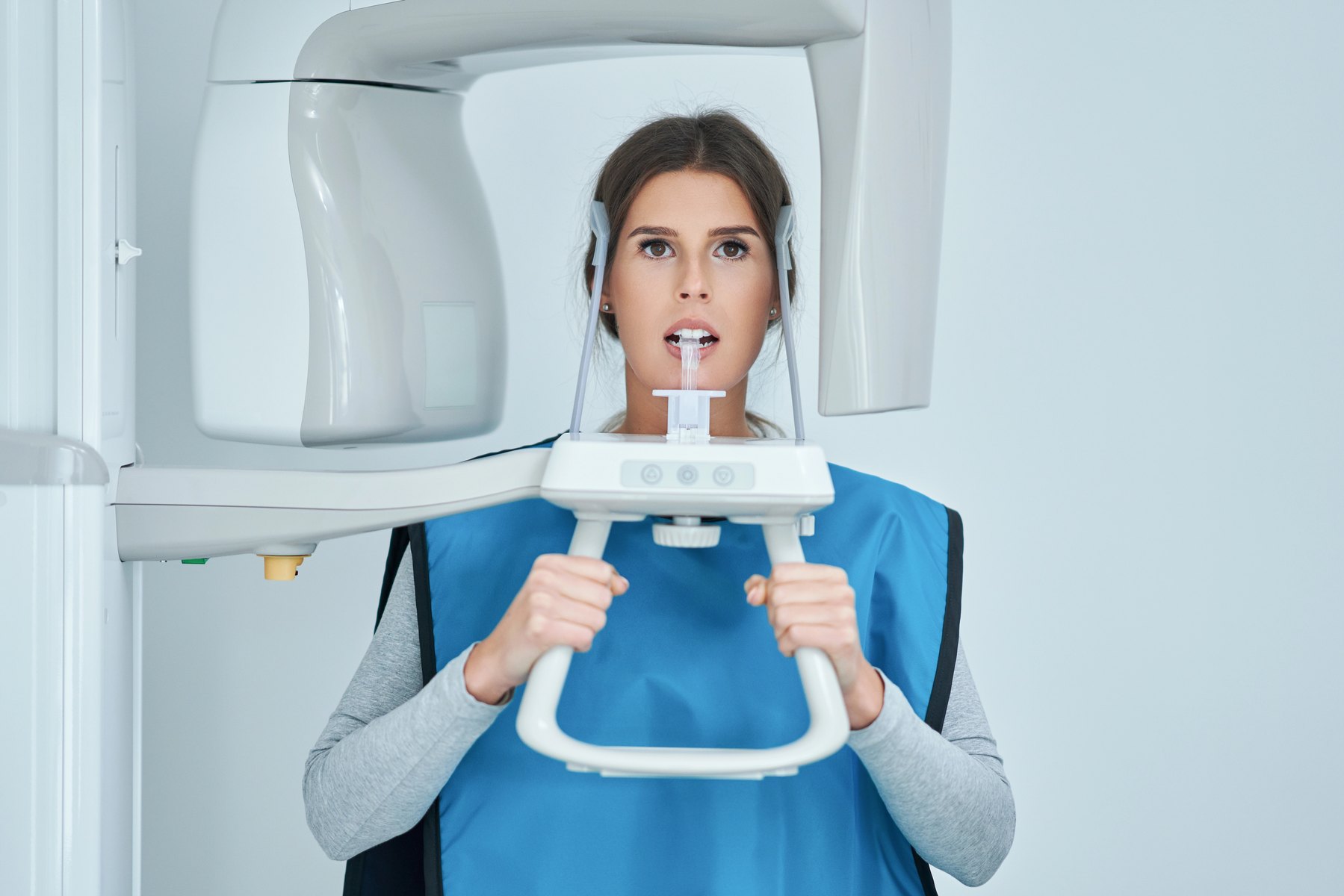
That does not mean every patient needs the same X-rays at every visit. The type and timing of dental radiographs should be based on your current oral health, age, symptoms, disease risk, previous images, and the clinical question your dentist is trying to answer.
Why Might Your Dentist Recommend Dental X-Rays?
- Decay between teeth or beneath areas that are difficult to inspect directly.
- The roots of a painful or previously treated tooth.
- Bone levels around teeth when gum disease is a concern.
- The position and development of teeth that have not fully erupted.
- The area around a missing tooth when replacement options are being considered.
- Changes around existing fillings, crowns, bridges, implants, or other dental work.
- Jaw structures or a broader area of the mouth when a panoramic image is clinically useful.
Not Every Dental X-Ray Shows the Same Thing
Different images answer different questions. Bitewing X-rays commonly show the crowns of upper and lower back teeth together and can help evaluate areas between teeth. Periapical images show an entire tooth from crown to root and the surrounding bone. A panoramic X-ray captures a broad two-dimensional view of the teeth, jaws, and nearby structures.
The most useful image is the one that provides information relevant to your symptoms, examination findings, or treatment planning. More imaging is not automatically better.
Do You Need X-Rays at Every Checkup?
No. Dental imaging should be individualized. Someone with active decay, new symptoms, extensive previous dental work, or periodontal disease may need different imaging from a patient whose oral health has remained stable. Previous X-rays can also matter when deciding whether a new image is necessary.
If you are unsure why an X-ray is being recommended, ask what the dentist is looking for and how the image could affect the care plan.
What About Radiation From Dental X-Rays?
Dental radiographs use ionizing radiation, so exposure should be justified by the expected diagnostic benefit and kept as low as reasonably achievable. Modern dental imaging and appropriate patient selection are intended to limit unnecessary exposure.
Tell the dental team if you are pregnant or think you may be pregnant, and share recent dental images when they are available. Your dentist can decide which images, if any, are appropriate for your situation.
How X-Rays Connect to Your Treatment Plan
An X-ray is a diagnostic tool, not a treatment by itself. The dentist interprets the image together with your symptoms, medical and dental history, and clinical examination.
For example, imaging may help determine whether a cavity can be treated with a tooth-colored dental filling, whether a weakened tooth should be evaluated for a dental crown, or whether bone and surrounding structures need further assessment before discussing dental implant treatment.
Dental X-Rays in Eden Prairie and Lakeville
Moss Dental Studio provides care from two Minnesota offices. Choose the location that works best for you when scheduling:
- Eden Prairie: 800 Prairie Center Dr, Suite 250, Eden Prairie, MN 55344 — call (952) 974-5116
- Lakeville: 18389 Orchard Trail, Lakeville, MN 55044 — call (612) 312-0087
For maps and office information, view the Moss Dental Studio locations or contact the dental team.
Questions Patients Ask
Are dental X-rays safe?
Dental X-rays involve radiation, so they should be prescribed when the expected diagnostic information justifies the exposure. Dentists use patient-selection and radiation-protection principles to avoid unnecessary imaging.
Can I refuse a dental X-ray?
You can ask questions and discuss recommended imaging with your dentist. The dentist should explain why the image is being recommended and how not having it could limit diagnosis or treatment planning.
What is the difference between bitewing and panoramic X-rays?
Bitewings provide detailed views of the crowns of back teeth and areas between them. A panoramic image captures a much broader view of the teeth and jaws. They answer different diagnostic questions.
Will X-rays show every dental problem?
No. X-rays add information, but they do not replace a clinical examination. Some problems are diagnosed primarily through symptoms and examination, while others require imaging or additional tests.
Should I bring old dental X-rays to a new dentist?
Yes, when they are available and diagnostically useful. Previous images can provide history and may help the dentist decide whether new imaging is necessary.
Need Answers About a Tooth or Your Dental Health?
If your dentist recommends an X-ray, the goal should be clearer diagnosis—not imaging for its own sake. Whether you have a new symptom, are establishing care, or need treatment planning, you can ask what the image is intended to show.
Schedule an evaluation so the Moss Dental Studio team can determine which diagnostic information is appropriate for your situation.
Eden Prairie: 800 Prairie Center Dr, Suite 250 — Call (952) 974-5116
Lakeville: 18389 Orchard Trail — Call (612) 312-0087