

Restorative Dentistry
Restorative dentistry is about getting damaged or missing teeth back to a condition where you can chew comfortably, maintain your mouth, and protect the healthy tooth structure that remains. It is not one procedure. It is the decision-making process that determines whether a tooth needs a small repair, more substantial protection, or replacement.
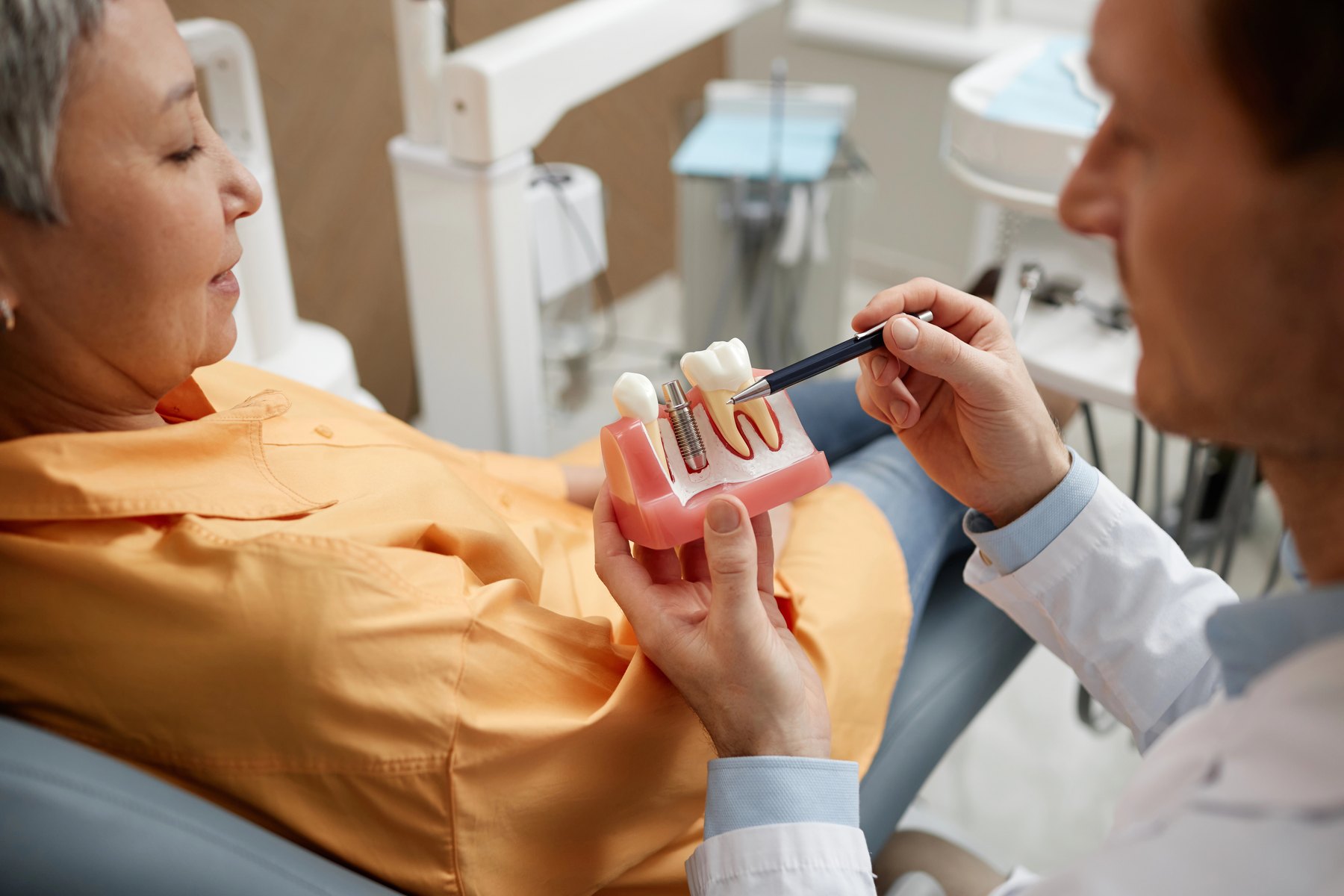
If you have a cavity, a cracked or worn tooth, failing dental work, or a missing tooth, the right restoration depends on how much healthy structure remains, the condition of the root and supporting tissues, your bite, and what you want treatment to accomplish.
What Problems Does Restorative Dentistry Address?
- Tooth decay that has damaged part of a tooth.
- Cracks, fractures, chips, or significant tooth wear.
- Old fillings or restorations that are failing or no longer seal the tooth predictably.
- A tooth weakened by previous treatment or loss of structure.
- One or more missing teeth that affect chewing, appearance, spacing, or bite stability.
- A tooth that may need root canal treatment before it can be predictably restored.
The Most Conservative Restoration That Can Predictably Do the Job
A useful restorative plan is not simply about choosing the strongest-looking treatment. It should balance preservation of healthy tooth structure with the amount of support the tooth actually needs.
A smaller area of decay may be appropriate for a dental filling. When a tooth has lost more structure or needs broader protection, a dental crown may be considered. If the tooth cannot be predictably retained or is already missing, the conversation shifts from repairing a tooth to replacing one.
Repairing a Tooth vs. Replacing a Tooth
These are different restorative decisions. Repair focuses on preserving and rebuilding a natural tooth. Replacement addresses the space left when a tooth is missing or cannot be retained.
Missing-tooth options can include a fixed bridge, a removable denture, or an implant-supported restoration depending on the number and location of missing teeth, the health of neighboring teeth and gums, available bone, your preferences, and the overall treatment plan.
If you are comparing replacement options, review Moss Dental Studio’s dental implant treatment information as one possible pathway. An evaluation is still needed to determine which approach fits your mouth.
What Happens During a Restorative Dentistry Evaluation?
- Identify what is damaged, decayed, missing, or failing—and why.
- Evaluate the amount and quality of remaining tooth structure.
- Assess the gums, bite, neighboring teeth, and existing dental work that could affect the restoration.
- Use dental imaging when it adds information that cannot be obtained from the examination alone.
- Discuss reasonable treatment options, including what each option preserves, changes, or replaces.
- Prioritize active disease and urgent problems before elective improvements when several needs are present.
Restorative Dentistry vs. Cosmetic Dentistry
Restorative care is primarily driven by health and function: repairing decay, strengthening damaged teeth, and replacing missing teeth. Cosmetic dentistry is primarily elective and appearance-focused. The two can overlap because a restoration also affects the way a tooth looks, but appearance should not obscure the underlying diagnosis or structural needs.
When Several Teeth Need Treatment
If you have accumulated several dental problems over time, you do not necessarily need to address everything at once. A useful treatment plan separates urgent disease from problems that can be staged or monitored. Ask which teeth are at greatest risk, which treatments depend on another step being completed first, and whether care can be phased around healing, finances, and your priorities.
Moss Dental Studio provides information about dental insurance and payment plans that you can review when planning treatment.
Restorative Dentistry in Eden Prairie and Lakeville
Moss Dental Studio provides care from two Minnesota offices. Choose the location that works best for you when scheduling:
- Eden Prairie: 800 Prairie Center Dr, Suite 250, Eden Prairie, MN 55344 — call (952) 974-5116
- Lakeville: 18389 Orchard Trail, Lakeville, MN 55044 — call (612) 312-0087
For maps and office information, view the Moss Dental Studio locations or contact the dental team.
Questions Patients Ask
What procedures are considered restorative dentistry?
Common restorative procedures include fillings, crowns, bridges, dentures, implant-supported restorations, and treatment used to preserve teeth before final restoration. The exact treatment depends on the diagnosis.
How does a dentist decide between a filling and a crown?
The decision depends on how much healthy tooth structure remains, the location and extent of damage, previous restorations, bite forces, and whether a filling can predictably support the tooth.
Can restorative dentistry save a cracked tooth?
Sometimes, but not every crack is the same. The location and depth of the crack, symptoms, remaining tooth structure, and condition of the root help determine whether the tooth can be restored.
What if I am missing a tooth?
A missing tooth can often be replaced with a bridge, implant-supported restoration, or removable option. The best choice depends on neighboring teeth, gums, bone, bite, and your goals.
Can restorative treatment be completed in stages?
Often, yes. When several needs exist, the dentist can prioritize active disease and structurally vulnerable teeth, then discuss how remaining care may be sequenced.
Ready to Repair What Is Affecting Your Smile?
If decay, a broken tooth, failing dental work, or missing teeth are making it harder to chew comfortably or feel confident about your dental health, the first step is not choosing a procedure—it is understanding what can be preserved and what needs to be rebuilt.
Schedule a restorative evaluation so Moss Dental Studio can identify the problem, explain the reasonable options, and help you build a treatment plan around your priorities.
Eden Prairie: 800 Prairie Center Dr, Suite 250 — Call (952) 974-5116
Lakeville: 18389 Orchard Trail — Call (612) 312-0087